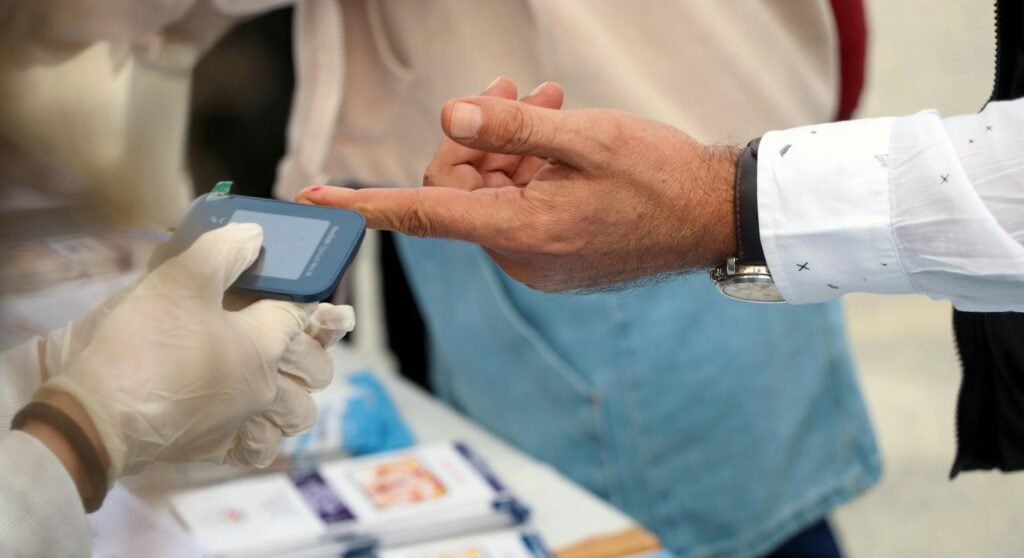
Diabetes in the UAE affects about 1 in 5 adults, and HbA1c testing remains the fastest way to track long-term glucose control. UAE labs typically charge AED 45 to 180, report results within 4 to 24 hours, and offer home collection in major cities.
- Primary test: HbA1c, also called glycated hemoglobin
- UAE price range: AED 45 to 180
- Turnaround time: 4 to 24 hours in most UAE labs
- Fasting required: No
- Home collection: Common in Dubai, Abu Dhabi, and Sharjah, usually AED 30 to 75 extra
- Insurance networks: Daman, NextCare, AXA, Cigna, and Mednet often include HbA1c in outpatient pathology benefits
Diabetes in the UAE in 2026 by the numbers
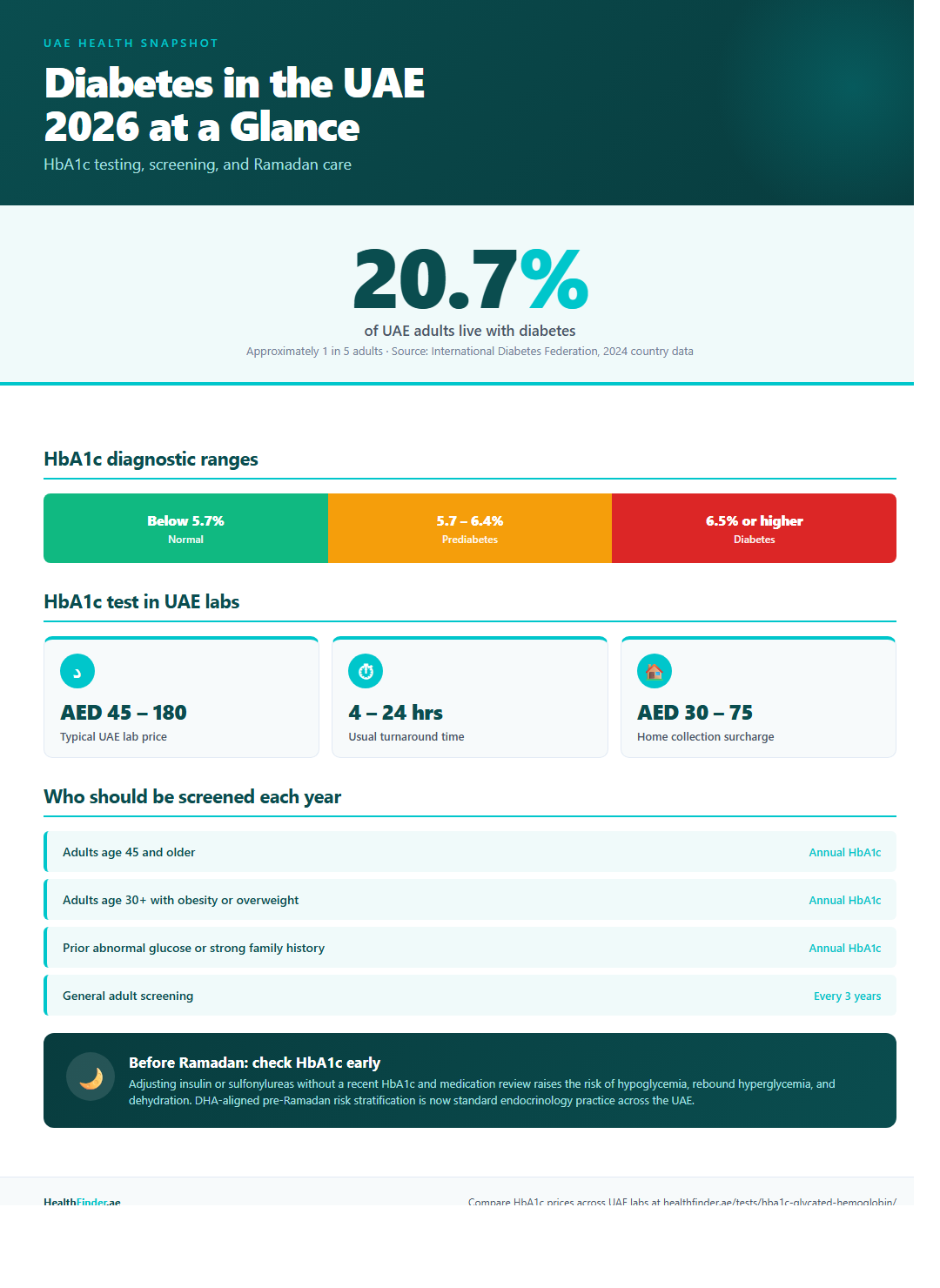
The UAE entered 2026 with a diabetes burden that sits among the highest globally by prevalence. International Diabetes Federation country data for 2024 put adult diabetes prevalence in the UAE at 20.7 percent, or about 1.27 million adults out of an adult population of 7.71 million. In plain terms, the country is still operating at roughly 1 in 5 adults with diabetes.
That number matters because diabetes in the Emirates rarely exists in isolation. It travels with abdominal obesity, fatty liver disease, hypertension, sleep disruption, and sedentary office routines. If you are already reading about prediabetes warning signs, the real issue is not a distant future diagnosis. It is a metabolic pattern that is already underway and usually visible in HbA1c, fasting glucose, triglycerides, liver enzymes, and waist circumference.
The 2026 outlook is not abstract. More adults are being pulled into screening through workplace health packages, insurer wellness programs, pharmacy campaigns, and annual reviews inside hospital groups. That means higher testing volume, earlier detection, and a larger share of people diagnosed before obvious complications appear. It also means more demand for structured follow-up, because a one-off lab result does not control diabetes, repeated monitoring does.
What an HbA1c test shows over three months
An HbA1c test measures the percentage of hemoglobin exposed to glucose over the lifespan of red blood cells, roughly 2 to 3 months. MedlinePlus explains that the test gives an average picture of blood sugar over time, not a snapshot from one meal, one missed dose, or one stressful morning.
That is why HbA1c is different from a fasting glucose check. A fasting glucose result can look acceptable after a short period of dietary control, while HbA1c still shows whether high glucose has been running in the background for weeks. The common diagnostic cut points remain straightforward: below 5.7 percent is normal, 5.7 to 6.4 percent indicates prediabetes, and 6.5 percent or above supports a diabetes diagnosis when confirmed in the proper clinical setting.
The practical advantage is speed. You do not need to fast, you can book it at any time of day, and UAE labs usually return it within the same day or the next day. If you want to compare HbA1c testing options across UAE labs, price and turnaround are the two most useful filters because the test itself is standardized.
How HbA1c testing fits diabetes detection and monitoring
HbA1c has become the workhorse test for both detection and follow-up. For someone without a known diagnosis, it helps pick up previously silent glucose elevation. For someone already living with type 2 diabetes, it shows whether the last few months of treatment, eating patterns, sleep, and exercise have actually lowered average glucose.
That matters in the UAE because diabetes often appears alongside broader metabolic disease. If elevated HbA1c travels with a rising BMI, high triglycerides, and fatty liver, the next question is no longer whether the body is insulin resistant. It is how advanced the insulin resistance has become. That is also why people who are reading about fatty liver and metabolic risk in UAE adults or checking liver markers linked with insulin resistance often end up ordering HbA1c in the same workup.
For monitoring, most clinics use HbA1c every 3 months when medication changes are underway and every 6 months when control is stable. The test is not perfect in every blood disorder or after recent transfusion, but for routine adult follow-up it remains the cleanest single marker for long-range glucose control.
How much HbA1c testing costs in UAE labs
The usual HbA1c price range in the UAE sits between AED 45 and AED 180. Lower prices are common in stand-alone diagnostic labs, package deals, and weekday screening offers. Higher prices show up in premium hospital labs, urgent processing, and bundled physician-led screening appointments.
Turnaround is usually 4 to 24 hours. Many hospital systems release same-day digital reports if the sample is collected early. Home collection is now routine in Dubai, Abu Dhabi, and Sharjah, usually with an added AED 30 to AED 75 call-out fee. That convenience matters for older adults, busy office workers, parents managing family appointments, and anyone who wants blood drawn before work.
Insurance often reduces the real out-of-pocket cost, but only if the policy’s outpatient laboratory benefit is active and the lab sits inside the approved network. Daman, NextCare, AXA, Cigna, and Mednet frequently cover HbA1c when it is ordered as part of diabetes screening or follow-up. The exact co-pay still depends on your plan tier, referral rules, and whether the test is bundled inside a larger health check.
How UAE screening practice and Ramadan fasting shape diabetes care
Dubai’s 2024 periodic health screening guideline recommends diabetes screening for adults aged 18 and above every 3 years, with annual screening when risk factors justify shorter follow-up, and it states that screening may be annual from age 30 onward. The DHA guideline gives clinicians room to shorten intervals for overweight adults, people with obesity, and anyone with prior abnormal glucose markers.
That UAE context matters because screening is not just a hospital issue. It is tied to employer wellness programs, insurer checkups, and routine outpatient reviews in general practice. If you need a specialist-led care plan after an abnormal result, the next step is usually one of the UAE’s endocrinology clinics in the UAE, especially when HbA1c is already in the diabetic range or glucose control is unstable.
Ramadan adds another layer. Meal timing shifts to suhoor and iftar, hydration hours shrink, and sulfonylurea or insulin users face real risk if doses are not adjusted. Peer-reviewed reviews indexed at the National Center for Biotechnology Information describe higher risk of hypoglycemia, hyperglycemia, dehydration, and ketoacidosis in some fasting patients with diabetes. This Ramadan diabetes review supports formal pre-Ramadan risk stratification rather than improvised fasting plans.
In practice, the safest UAE pattern is simple: check HbA1c before Ramadan, review the medication schedule early, confirm whether home glucose monitoring is in place, and do not wait until the week before fasting starts. That is especially relevant for people moving between Dubai and Abu Dhabi healthcare listings, where continuity of care often depends on insurer network access and how quickly previous lab records can be pulled into the next clinic visit.
.hf-faq { border: 1px solid #e2eaf4; border-radius: 8px; margin: 0 0 10px 0; background: #fff; overflow: hidden; }
.hf-faq summary { list-style: none; cursor: pointer; padding: 16px 50px 16px 20px; font-weight: 600; font-size: 16px; color: #0a4d4f; position: relative; outline: none; user-select: none; }
.hf-faq summary::-webkit-details-marker { display: none; }
.hf-faq summary::after { content: ‘+’; position: absolute; right: 20px; top: 50%; transform: translateY(-50%); font-size: 22px; font-weight: 400; color: #00c6cb; transition: transform 0.2s ease; }
.hf-faq[open] summary::after { content: ‘−’; }
.hf-faq summary:hover { background: #f7fafb; }
.hf-faq[open] summary { background: #f0fafa; border-bottom: 1px solid #e2eaf4; }
.hf-faq-answer { padding: 16px 20px; color: #4a5568; font-size: 15px; line-height: 1.6; }
.hf-faq-answer p { margin: 0; }
Frequently asked questions
How common is diabetes in the UAE in 2026?
The UAE started 2026 with one of the heaviest diabetes burdens in the region. IDF country data for 2024 put adult prevalence at 20.7 percent, which is roughly 1 in 5 adults. That keeps diabetes screening, HbA1c testing, and metabolic follow-up in constant demand.
Does an HbA1c test require fasting in UAE labs?
No. HbA1c does not require fasting because it reflects average blood glucose over roughly 2 to 3 months. That makes it easier to book during a workday, combine with routine clinic visits, or arrange through home collection without changing meal timing.
How much does an HbA1c test cost in the UAE?
Most UAE labs price HbA1c between AED 45 and AED 180. Premium hospital labs, urgent processing, and bundled screening packages often sit at the top end. Home collection usually adds AED 30 to AED 75, depending on city, timing, and provider policy.
Which UAE adults should book diabetes screening every year?
Adults with overweight, obesity, previous abnormal glucose results, strong family history, or metabolic syndrome usually move into yearly screening. DHA guidance also supports shorter intervals when risk factors are present, and many Dubai clinics screen adults from age 30 every year.
Why does Ramadan change diabetes planning in the UAE?
Ramadan changes when you eat, drink, sleep, and take medication. For people on insulin or sulfonylureas, that can raise the risk of hypoglycemia, dehydration, and rebound hyperglycemia. A pre-Ramadan medication review and a recent HbA1c result make fasting decisions much safer and more precise.
Compare HbA1c test prices across UAE labs side by side and book the option that fits your location, budget, and turnaround needs. Compare HbA1c prices by lab