Hashimoto’s disease in UAE adults is commonly evaluated with a thyroid panel priced at AED 80 to 260, with results often available within 24 hours. Fasting is not usually required, home collection is common, and women carry most diagnosed autoimmune thyroid burden.
- Primary monitoring test: Thyroid panel with TSH, free T4, and free T3
- UAE price range: AED 80 to 260, with antibodies often adding AED 60 to 180
- Turnaround time: Same day to 24 hours in many UAE labs
- Fasting required: No for a standard thyroid panel
- Home collection: Common through major private hospital and lab networks
- Diet pattern: Mediterranean-style, protein-forward, low in refined sugars
What a Hashimoto’s diet and lifestyle plan actually targets
Hashimoto’s thyroiditis in the UAE is an autoimmune process that slowly damages thyroid tissue and pulls patients toward hypothyroidism. A useful diet and lifestyle plan does not promise a cure. It aims at four concrete targets: steady thyroid hormone replacement, reduced inflammation load, correction of nutrient deficits, and better blood-sugar control across ordinary meals.
The food pattern that does that best is not exotic. It is a Mediterranean-style structure with fish, eggs, yogurt, olive oil, vegetables, fruit, legumes, nuts, and measured portions of rice, oats, or potatoes. That structure works because autoimmune thyroid disease worsens when fatigue, constipation, weight gain, and glucose swings pile on top of each other. In practice, the strongest plate is simple: protein first, vegetables second, starch third.
Testing still anchors the plan because diet decisions make more sense when the hormone picture is clear. A full thyroid panel at UAE lab prices checks TSH, free T4, and free T3 together, which is the core biochemical view of control. MedlinePlus thyroid test guidance explains why TSH, T4, T3, and antibody testing are used together when autoimmune thyroid disease is suspected.
Hashimoto’s diets also have to respect the disease they are managing. When thyroid output has already fallen, the daily reality looks like the underactive thyroid pattern: slower digestion, colder body temperature, higher LDL risk, lower energy, and easier weight gain. The diet has to lower friction, not add more.
Which foods support Hashimoto’s control in daily meals
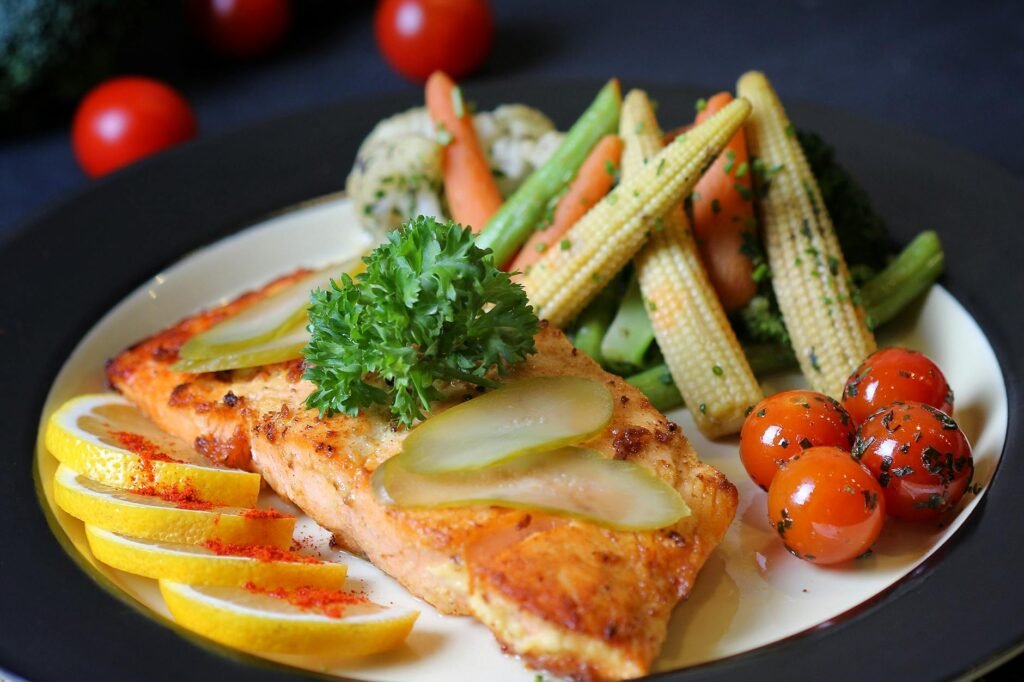
Protein belongs in every meal because it improves satiety, supports lean mass, and reduces the carbohydrate spikes that make fatigue worse. In the UAE, the easiest anchors are grilled fish, salmon, eggs, Greek yogurt, laban, chicken, lentils, chickpeas, and labneh paired with vegetables and fruit. That pattern fits home cooking and mall or delivery food when patients order with discipline instead of appetite.
Selenium is the nutrient that gets the most attention in Hashimoto’s care for a reason. Selenium is required for thyroid hormone conversion and antioxidant defense inside the thyroid gland. A recent systematic review and meta-analysis indexed at PubMed found that selenium supplementation improved TSH and anti-TPO values in several patient groups. That does not justify random megadosing, but it does justify food-first intake from fish, shellfish, tuna, sardines, eggs, and Brazil nuts.
Fiber also matters because constipation is common in autoimmune hypothyroidism. Legumes, chia, oats, berries, cucumber, tomatoes, leafy greens, and cooked vegetables make the plan work better than aggressive food restriction. UAE patients do badly when they replace balanced meals with coffee, snacks, and late-night restaurant food. A better pattern is breakfast with protein, lunch with fish or chicken and vegetables, and dinner that stays lighter than lunch.
Iodine does not need to be chased in supplements unless deficiency has been shown. Most UAE households already use iodized salt and restaurant food adds further exposure. In Hashimoto’s disease, excess iodine can worsen thyroid autoimmunity, so the smarter move is normal culinary use, not thyroid support capsules loaded with kelp.
How gluten and celiac disease change a Hashimoto’s diet plan
Gluten does not need to be removed automatically in every Hashimoto’s patient. That shortcut creates expensive, rigid diets and often misses the real issue, which is poor meal structure rather than wheat itself. The right question is different: is there evidence of celiac disease or a true gluten-related problem?
That question matters because autoimmune overlap is well established. A meta-analysis indexed at PubMed found a significantly increased prevalence of thyroid disease among people with celiac disease. A gut-thyroid review in the NCBI archive also describes strong clinical overlap between Hashimoto’s and celiac disease, especially when bloating, diarrhea, recurrent abdominal pain, or iron deficiency are present. That is why the celiac disease overlap belongs in every serious Hashimoto’s diet discussion.
The practical rule is clean. Test first when symptoms point that way. If celiac serology is positive or biopsy confirms disease, the diet becomes strictly gluten free. If testing is negative and gut symptoms are absent, the better move is portion control, protein balance, and replacement of refined breads, pastries, and desserts with whole-food meals.
This distinction matters in the UAE because many patients jump from one restrictive diet to another while still eating too little protein and too much sweetened convenience food. Gluten-free packaged snacks, cookies, and breads are still ultra-processed foods. They do not improve autoimmune control by default.
Why UAE routines and Ramadan timing affect Hashimoto’s control
The UAE context changes the daily plan in ways generic thyroid articles miss. Vitamin D deficiency is endemic despite year-round sun exposure, driven by heat avoidance, indoor work, clothing habits, and low UVB exposure. UAE clinical practice guidelines indexed at PubMed recommend 1000 to 2000 IU of vitamin D daily for adults, which is why supplementation is common across endocrinology and primary care clinics.
That matters in Hashimoto’s disease because low vitamin D tracks closely with higher thyroid antibody activity in the literature, and UAE patients often arrive with both fatigue and deficiency in the same lab report. Young Emirati thyroid antibody studies have also found abnormal TPO antibodies in about one in ten women, which keeps female screening and follow-up firmly on the radar in Dubai, Abu Dhabi, and the northern emirates.
Food timing matters as well. The local food environment is dense with sweet drinks, white rice, flatbreads, desserts, and app-based convenience meals, so patients do better with fixed meal rules than with vague restraint. During Ramadan, the structure has to tighten further. Levothyroxine timing has to stay consistent, water intake has to be rebuilt overnight, and iftar should not start with a sugar-heavy meal that turns the evening into a fatigue cycle. A steadier Ramadan pattern is dates in a limited number, soup, grilled protein, vegetables, yogurt, and a measured starch serving, followed by a protein-based suhoor instead of pastries.
When endocrinology review and thyroid testing sharpen the plan
Diet improves outcomes, but it does not replace medication titration or follow-up testing. The plan gets sharper once patients know whether TSH is still high, free T4 is low, and thyroid antibodies remain positive. That is where endocrinology care across the Emirates adds value, especially for patients with pregnancy plans, persistent symptoms, dose changes, or major swings in weight and energy.
The most useful starting point is still a thyroid panel, because it is fast, low-cost, and widely available. Standard UAE patient-facing pricing for TSH, free T4, and free T3 sits in the AED 80 to 260 range, with results often back in 24 hours. Antibodies such as TPO and TgAb often add AED 60 to 180 when autoimmune confirmation or follow-up is needed. That makes regular monitoring much easier than patients assume.
The lifestyle plan is strongest when it follows the lab pattern. High TSH with fatigue and constipation requires tighter medication adherence, lower refined-carbohydrate intake, and better fiber structure. Normal thyroid function but ongoing symptoms should prompt a second look at vitamin D, ferritin, B12, calorie intake, sleep debt, or poor meal timing. Patients who need a symptom refresher can compare their pattern with thyroid symptoms in women in the UAE, then decide whether fresh testing is overdue.
The action step is direct. Rebuild meals around protein and whole foods, correct documented deficiencies, keep levothyroxine timing fixed, and compare thyroid panel prices across UAE labs when the symptom pattern no longer matches the current treatment plan.
.hf-faq { border: 1px solid #e2eaf4; border-radius: 8px; margin: 0 0 10px 0; background: #fff; overflow: hidden; }
.hf-faq summary { list-style: none; cursor: pointer; padding: 16px 50px 16px 20px; font-weight: 600; font-size: 16px; color: #0a4d4f; position: relative; outline: none; user-select: none; }
.hf-faq summary::-webkit-details-marker { display: none; }
.hf-faq summary::after { content: ‘+’; position: absolute; right: 20px; top: 50%; transform: translateY(-50%); font-size: 22px; font-weight: 400; color: #00c6cb; transition: transform 0.2s ease; }
.hf-faq[open] summary::after { content: ‘−’; }
.hf-faq summary:hover { background: #f7fafb; }
.hf-faq[open] summary { background: #f0fafa; border-bottom: 1px solid #e2eaf4; }
.hf-faq-answer { padding: 16px 20px; color: #4a5568; font-size: 15px; line-height: 1.6; }
.hf-faq-answer p { margin: 0; }
Frequently asked questions
What is the best diet pattern for Hashimoto’s patients in the UAE?
The strongest base is a Mediterranean-style pattern built around fish, eggs, yogurt, legumes, vegetables, fruit, olive oil, and controlled starch portions. It reduces blood-sugar swings, raises protein and fiber intake, and makes selenium, iron, zinc, and vitamin D correction easier to execute in daily UAE routines.
Do Hashimoto’s patients in the UAE need to avoid gluten completely?
No. A strict gluten-free diet belongs to patients with confirmed celiac disease or a proven gluten-related disorder. The overlap between Hashimoto’s and celiac disease is real, so persistent bloating, iron deficiency, diarrhea, or recurrent abdominal pain justify celiac testing before gluten is removed.
Which supplements matter most in a Hashimoto’s lifestyle plan?
Vitamin D matters in the UAE because deficiency is widespread and local guidelines recommend adult supplementation. Selenium matters when intake is poor, but food first is the safer default. Iron, B12, and zinc also matter because thyroid symptoms worsen when deficiency sits on top of autoimmune thyroid disease.
How much does Hashimoto’s testing cost in the UAE?
A thyroid panel with TSH, free T4, and free T3 usually costs AED 80 to 260 across UAE labs, with results often available within 24 hours. Thyroid antibody testing such as TPO and TgAb usually adds AED 60 to 180 when autoimmune confirmation is needed.
Does Ramadan change a Hashimoto’s diet and medication routine?
Yes. Levothyroxine timing has to stay consistent, hydration has to be rebuilt overnight, and the sunset meal should not turn into a refined-carb surge. Suhoor works best when it is built around protein, yogurt, eggs, oats, chia, and fruit rather than pastries and sweet drinks.
Compare thyroid panel prices across all UAE labs side by side and book the option that fits your branch, budget, and turnaround. Browse thyroid panel labs →