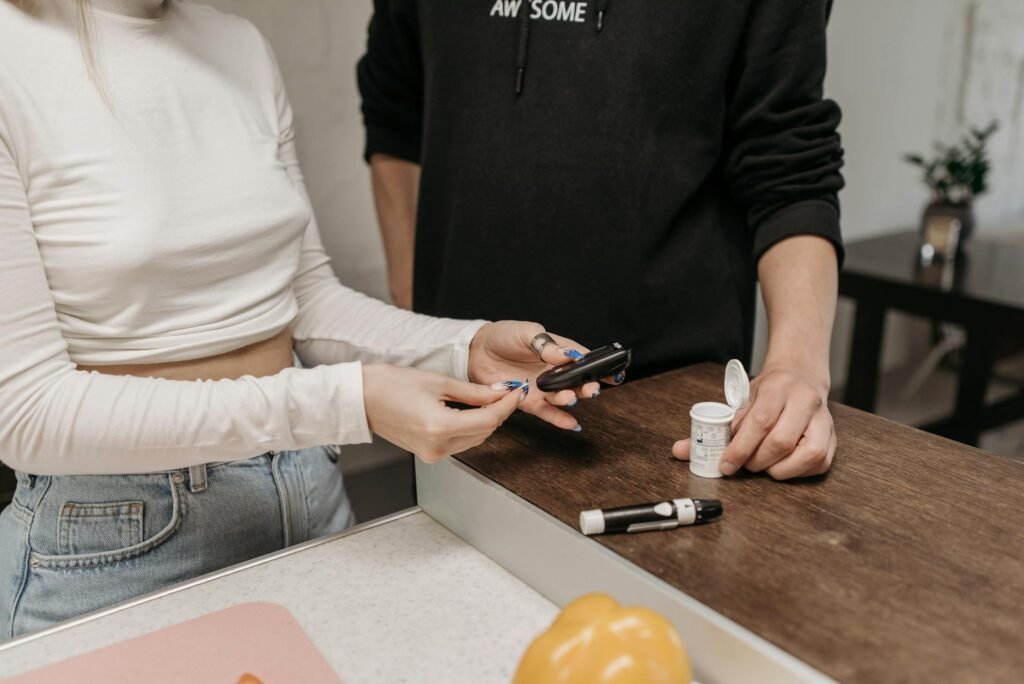
Ramadan diabetes safety protocols in UAE clinics start with an HbA1c test priced at AED 45 to 180, reported in 4 to 24 hours, and done without fasting. Clinics then set medication timing, glucose checks, and fast-breaking thresholds before Ramadan begins.
- Primary test: HbA1c, also called glycated hemoglobin
- UAE price range: AED 45 to 180
- Turnaround time: 4 to 24 hours in most UAE labs
- Fasting required for HbA1c: No
- Main clinic framework: IDF-DAR 2021 risk assessment before Ramadan
- Emergency break-fast thresholds: Below 3.9 mmol/L or above 16.6 mmol/L
Why Ramadan diabetes protocols start before the first fast
Ramadan diabetes safety starts weeks before the crescent, not on the first day of fasting. The Ramadan chapter in NCBI Endotext states that pre-Ramadan planning should ideally begin 6 to 8 weeks before the month starts. That window gives clinics time to review control, shift medication timing, and spot the people who should not be fasting at all.
The first question is not spiritual intent. It is risk. People who are already dealing with recurrent lows, unstable control, pregnancy on insulin, advanced kidney disease, or recent hospital care enter Ramadan on unsafe ground. For many adults, the more common clinic scenario is simpler: they are living with fasting with type 2 diabetes, they want to fast, and they need a plan that matches their actual regimen rather than a generic handout.
That is why clinic protocols follow a sequence. Review the latest HbA1c. Check recent self-monitoring results or CGM summaries. Look at medications one by one. Ask about late-afternoon lows, missed suhoor, driving, gym routines, and whether work happens outdoors. A fasting plan built without those details looks tidy on paper and fails in the second week.
How HbA1c testing anchors Ramadan medication review
HbA1c is the anchor because it shows whether the last two to three months were controlled or unstable. A few decent finger-stick readings in Shaaban do not override a high HbA1c. If you need the market view before booking, compare HbA1c lab pricing in the UAE first, because the test is widely available, does not require fasting, and usually comes back within the same day or the next day.
MedlinePlus explains that HbA1c reflects average blood sugar exposure over about three months. In Ramadan planning, that matters more than a one-off fasting glucose result. A patient who feels fine, but walks into clinic with an HbA1c well above target, usually needs a tighter protocol, closer glucose monitoring, or a direct decision not to fast.
In UAE private labs, HbA1c usually sits between AED 45 and AED 180. Turnaround is commonly 4 to 24 hours, and home collection is easy to arrange in the major cities when the clinic wants a result before the next review. That speed is why the test appears early in the pathway and not as an afterthought. It tells the clinician whether the discussion is about fine-tuning, damage control, or stopping the plan before a preventable complication develops.
The HbA1c result also determines how aggressive the rest of the Ramadan protocol needs to be. A patient with solid control and no major lows may move into a lighter adjustment plan. A patient with a high baseline, recent symptomatic lows, or wide post-meal spikes often needs the stricter pathway described in the Ramadan diabetes safe fasting guide, with clearer meal rules, more glucose checks, and tighter follow-up after the first several fasts.
How medication timing changes for sulfonylureas and insulin
The medication section is where UAE clinics do the real work. Endotext’s Ramadan tables show that sulfonylureas are usually shifted to iftar, and once-daily doses are reduced when glucose is already well controlled. With twice-daily sulfonylureas, the iftar dose often stays the same while the suhoor dose is reduced. Older sulfonylureas such as glibenclamide are avoided because the late-day hypoglycemia risk is harder to control.
Insulin changes are even more structured. Basal-bolus regimens often become iftar-dominant. Endotext describes starting basal insulin with a 20 to 40 percent reduction and moving it to iftar or earlier in the evening. Rapid-acting insulin at suhoor is commonly reduced by 30 to 50 percent, the lunch dose disappears, and the iftar dose is adjusted to the meal and the two-hour post-iftar reading. That is the protocol language behind what patients often hear as, “the sunset dose becomes the heavier dose.”
These changes are designed to prevent two opposite failures. The first is the late-afternoon low triggered by unchanged medication plus a long fasting window. The second is the post-iftar surge that follows an oversized evening meal with under-matched insulin. When those patterns are ignored, the risk moves quickly from a routine low into a full hypoglycemia warning pattern, or in poorly controlled insulin deficiency states, into diabetic ketoacidosis emergency signs that demand urgent care.
How UAE clinics apply Ramadan diabetes protocols
UAE Ramadan diabetes clinics are not improvising these plans from scratch each year. Abu Dhabi’s Ambulatory Healthcare Services reported that its chronic disease clinics included the IDF-DAR practical guidelines and the 2021 IDF-DAR risk stratification tool in physician education, then built the tool directly into the Cerner electronic record for pre-Ramadan counseling. That UAE study on PMC is direct evidence that the IDF-DAR framework is being used inside local clinic workflows, not treated as background reading.
The same regional pattern shows up in UAE collaboration. The 2023 validation study of the IDF-DAR tool included Imperial College London Diabetes Centre in Abu Dhabi, Tawam Hospital in Al Ain, and Dubai Hospital authors, which shows where the reference standard is being tested and refined. In day-to-day use, the clinic pathway stays consistent across emirates even though the regulators differ. Dubai providers sit under Dubai Health, Abu Dhabi providers under DOH, and the northern emirates under MOHAP licensing structures, yet the Ramadan diabetes workflow still centers on three steps: risk score, medication review, and fixed glucose-monitoring rules.
That is also why patients who are shifting from primary care into specialist follow-up usually end up in UAE endocrinology clinics. The issue is no longer a basic education talk. It is whether the patient can fast safely on the current regimen, whether CGM should be added, and whether the first few fasting days need rapid review rather than waiting until the month is nearly over.
When glucose checks and fast-breaking rules become non-negotiable
Glucose monitoring during Ramadan is not optional because fasting changes the timing of both meals and drug exposure. Many clinic plans set fixed checks around suhoor, midday, late afternoon, and after iftar, then add symptom-based checks on top. Endotext goes further for intensive insulin therapy and recommends a 5 to 7 point guide for higher-risk patients. The structure matters because unplanned checking usually happens too late.
The red-line thresholds are explicit. The fast must be broken immediately if glucose falls below 70 mg/dL, which is 3.9 mmol/L, or rises above 300 mg/dL, which is 16.6 mmol/L. The same rule applies when symptoms of hypoglycemia, hyperglycemia, dehydration, or acute illness appear even before the reading is repeated. UAE clinics use those thresholds because they stop people from pushing through danger signs out of determination or embarrassment.
The practical sequence after a low is straightforward. Check, break the fast, treat with fast carbohydrate, recheck, hydrate after sunset, and adjust the next scheduled dose rather than repeating the same mistake on the following day. The practical sequence after a high is just as direct. Stop fasting, hydrate, check ketone risk when indicated, and review whether the problem came from a missed dose, a large iftar load, or an insulin plan that no longer matches the meal pattern. Protocols work because they remove hesitation at the exact point where hesitation causes harm.
.hf-faq { border: 1px solid #e2eaf4; border-radius: 8px; margin: 0 0 10px 0; background: #fff; overflow: hidden; }
.hf-faq summary { list-style: none; cursor: pointer; padding: 16px 50px 16px 20px; font-weight: 600; font-size: 16px; color: #0a4d4f; position: relative; outline: none; user-select: none; }
.hf-faq summary::-webkit-details-marker { display: none; }
.hf-faq summary::after { content: ‘+’; position: absolute; right: 20px; top: 50%; transform: translateY(-50%); font-size: 22px; font-weight: 400; color: #00c6cb; transition: transform 0.2s ease; }
.hf-faq[open] summary::after { content: ‘−’; }
.hf-faq summary:hover { background: #f7fafb; }
.hf-faq[open] summary { background: #f0fafa; border-bottom: 1px solid #e2eaf4; }
.hf-faq-answer { padding: 16px 20px; color: #4a5568; font-size: 15px; line-height: 1.6; }
.hf-faq-answer p { margin: 0; }
Frequently asked questions
Which Ramadan diabetes protocol comes first in UAE clinics?
The first step is pre-Ramadan risk review, not dose guessing. UAE clinics usually check HbA1c, review recent lows, assess kidney status, and classify fasting risk with an IDF-DAR style framework before they change meal timing or medication timing.
Do UAE clinics ask for HbA1c before Ramadan fasting starts?
Yes. HbA1c gives the last two to three months of glucose control and helps determine whether fasting is realistic, risky, or unsafe. In UAE labs it usually costs AED 45 to 180, does not require fasting, and is commonly reported within 4 to 24 hours.
How do sulfonylurea and insulin doses usually change during Ramadan?
Sulfonylureas are generally shifted to iftar, with dose reduction when glucose is already well controlled. Basal-bolus insulin plans often move basal insulin to iftar with a 20 to 40 percent reduction, while the suhoor rapid-acting dose is commonly cut by 30 to 50 percent.
When should a person with diabetes break the fast during Ramadan?
The fast should end immediately when glucose drops below 3.9 mmol/L, rises above 16.6 mmol/L, or symptoms of hypoglycemia, dehydration, or acute illness appear. Those thresholds are written into Ramadan diabetes guidance because delaying action drives avoidable emergencies.
How often do UAE clinics ask for glucose checks during Ramadan?
Most clinic plans fix checks around suhoor, midday, late afternoon, and after iftar, then add extra checks for symptoms or heavy activity. High-risk patients on intensive insulin often move to the 5 to 7 point monitoring pattern described in Ramadan diabetes guidance.
Compare HbA1c prices across UAE labs side by side and book the option that matches your budget, location, and reporting time. Browse HbA1c test options in UAE labs