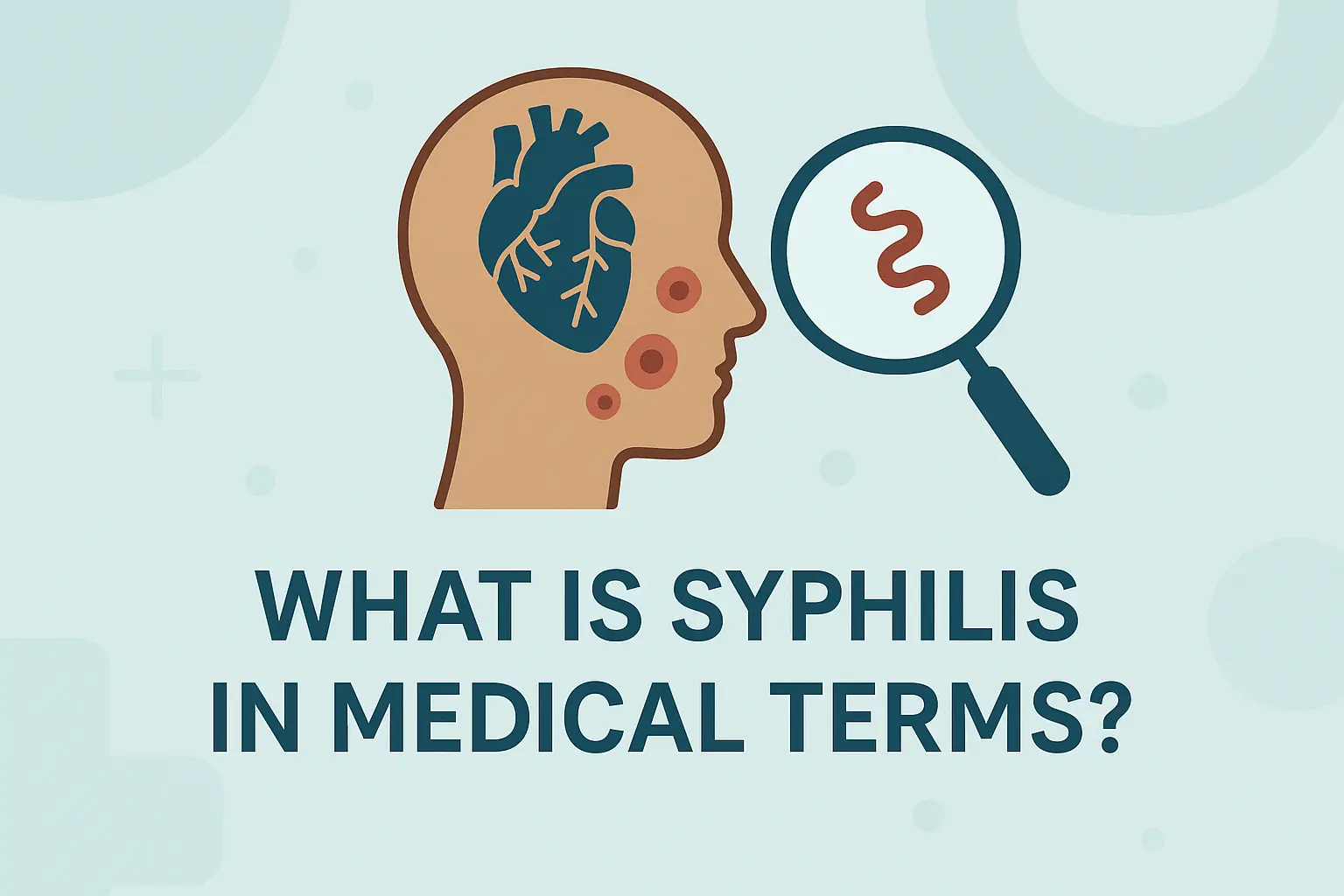
Syphilis is a sexually transmitted infection (STI) caused by the bacterium Treponema pallidum. This infection progresses through distinct stages and can result in serious systemic complications if left untreated. Early diagnosis and antibiotic treatment can cure syphilis and prevent long-term effects.
Overview of Syphilis
Syphilis is transmitted primarily through sexual contact, including vaginal, oral, and anal intercourse. It may also be transmitted from mother to child during pregnancy, leading to congenital syphilis.
Although syphilis can cause significant health concerns, it is not life-threatening when diagnosed and treated early. Penicillin remains the most effective treatment.
Symptoms of Syphilis
The symptoms of syphilis vary by stage:
Primary Stage
- Painless sore (chancre) at the site of infection (genitals, mouth, or rectum)
Secondary Stage
- Skin rash (especially on palms and soles)
- Swollen lymph nodes
- Fever, sore throat, fatigue
- Muscle aches and hair loss
Latent Stage
- No visible symptoms, but the bacteria remain in the body
Tertiary Stage (if untreated)
- Severe damage to the brain, nerves, heart, or other organs
Syphilis: Causes and Risk Factors
Syphilis is caused by Treponema pallidum and spreads primarily through:
- Unprotected sex with an infected partner
- Having multiple sexual partners
- Previous STIs, including HIV
- Substance use that increases risky sexual behavior
- Weakened immune system
When to See a Doctor for Syphilis?
Seek immediate medical attention if you:
- Discover painless genital sores or unexplained rashes
- Experience persistent flu-like symptoms
- Have had unprotected sex with a new or multiple partners
- Observe neurological symptoms such as confusion or visual disturbances
Related Terms
- Gonorrhea
- Chlamydia
- Treponema pallidum
- HIV
- Penicillin